
(Corrected Version) SILJ Is Breaking Out—But It’s Not a Pure Silver-Leverage Play
Aya, Andean and Kuya offer high-torque exposure to a rising silver price through silver-focused mining operations

apologies, there was an error in our previous newsletter, corrected version below
Foreword , SILJ is not a pure silver play
SILJ is marketed as a junior-silver-miner ETF, but it is not a portfolio of exclusively primary-silver producers. Its prospectus permits index constituents that either earn most revenue from silver, command a significant share of global silver production, or are developing new silver supply.
The methodology explicitly admits diversified mining, gold-mining, zinc-mining, copper-mining and streaming sectors, then adjusts weights for each company’s silver-revenue percentage.
That makes SILJ a basket of varying silver sensitivities, not a pure silver-equity proxy.
First Majestic illustrates the distinction: it produces gold, zinc and lead alongside silver; even its 2025 output included non-silver production. Inspect revenue mix
The Breakout Nobody Wants to Believe
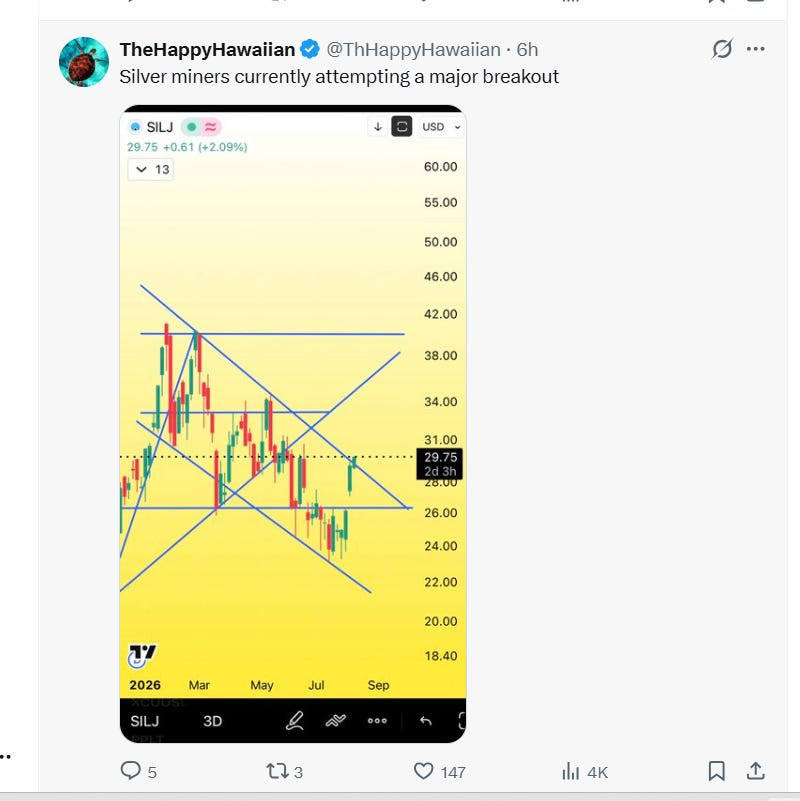
Silver miners look as if they are standing on the edge of a massive breakout—and SILJ is the chart that matters most. Rather than collapsing after every rally attempt, the ETF keeps flagging: consolidating, resetting, and refusing to surrender its bullish structure. That is not the behavior of a sector preparing for another washout. It is the behavior of a sector quietly absorbing supply before the next major leg higher.
Flags Fly Before the Fireworks
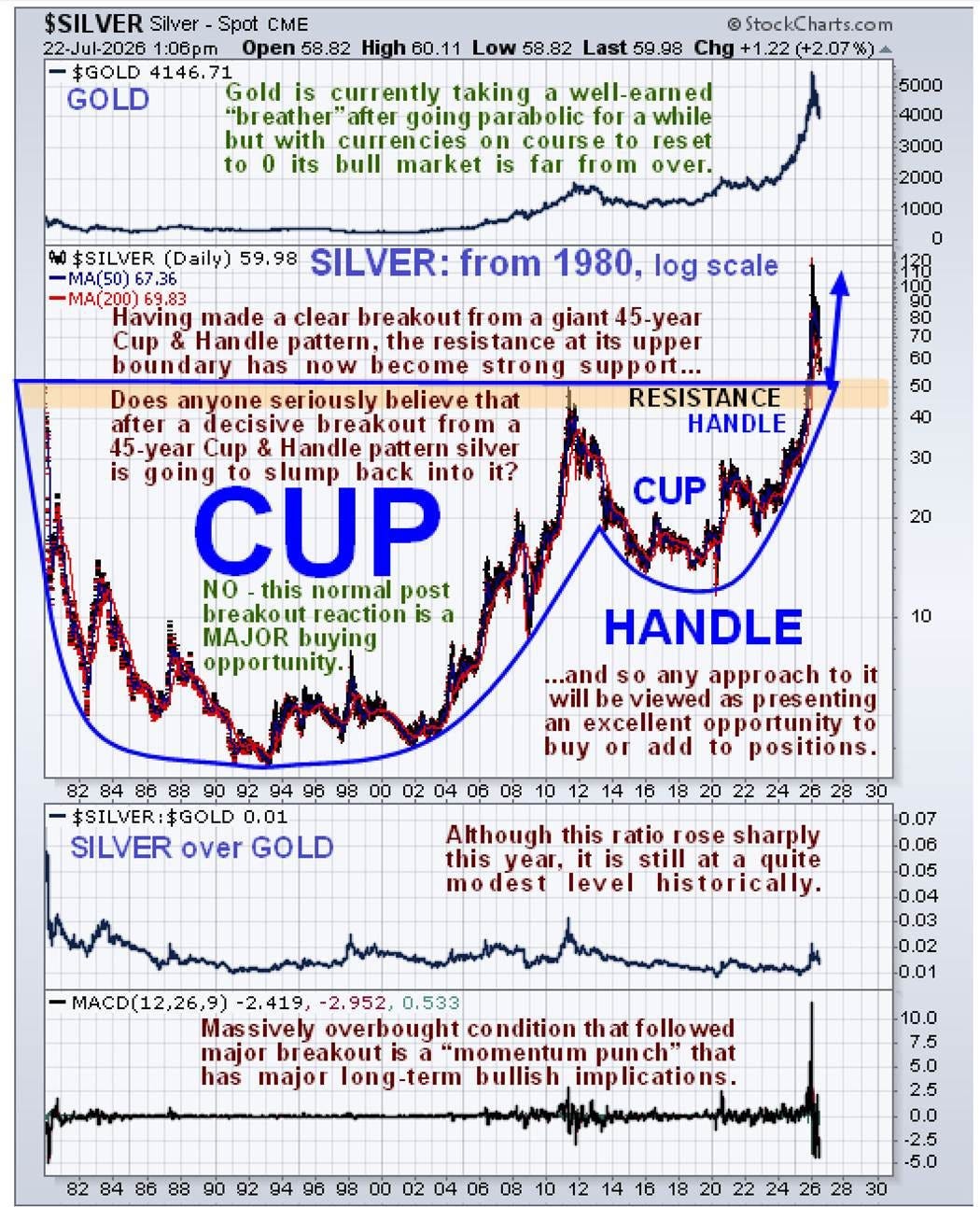
The fundamental backdrop is even more explosive than the technical picture. Silver is no longer merely a monetary metal or jewelry input. It is a critical industrial material embedded in the technologies governments, corporations, and investors insist will define the future: AI data centers, 5G infrastructure, robotics, advanced military systems, aerospace, solar manufacturing, and electrification.
Silver remains the number-one conductor of electricity. In a world being forced to consume more energy—and build more infrastructure to manage it—this matters.
The Math Does Not Negotiate
The supply-and-demand arithmetic is not complicated, despite the usual parade of banker-sponsored commentary designed to make it sound complicated. Annual mine production sits around 820 million ounces. Demand estimates increasingly push into the 1.2-to-1.4-billion-ounce range.
The gap does not disappear because a bullion-bank analyst publishes another reassuring note. It must be covered by above-ground inventories, recycling, substitution, or dramatically higher prices. And substitution is not a magic wand when performance, conductivity, and reliability matter.
Hormuz: The Energy Wildcard
Now add energy shock risk. Any serious disruption around the Strait of Hormuz threatens oil flows, shipping, industrial inputs, inflation expectations, and geopolitical stability all at once. That is precisely the sort of environment in which hard assets reassert their relevance—and in which silver’s dual role as industrial necessity and monetary metal becomes impossible to ignore.
Paper Promises Meet Physical Reality
For years, the paper market has helped suppress the message coming from physical supply and real-world demand. Paper promises are plentiful; economically viable silver deposits are not. Investors have been trained to sell every silver rally, distrust every mining-company advance, and assume the old manipulation machine will always win.
That assumption is becoming dangerous.
SILJ Could Be the Tell
Silver miners remain deeply undervalued relative to the metal, the broader equity market, and the strategic importance of the resource they produce. If SILJ breaks decisively above its flagging range, capital could rush into a small, underowned sector with astonishing speed.
The breakout will look obvious in hindsight. It never does beforehand.
Aya Gold & Silver
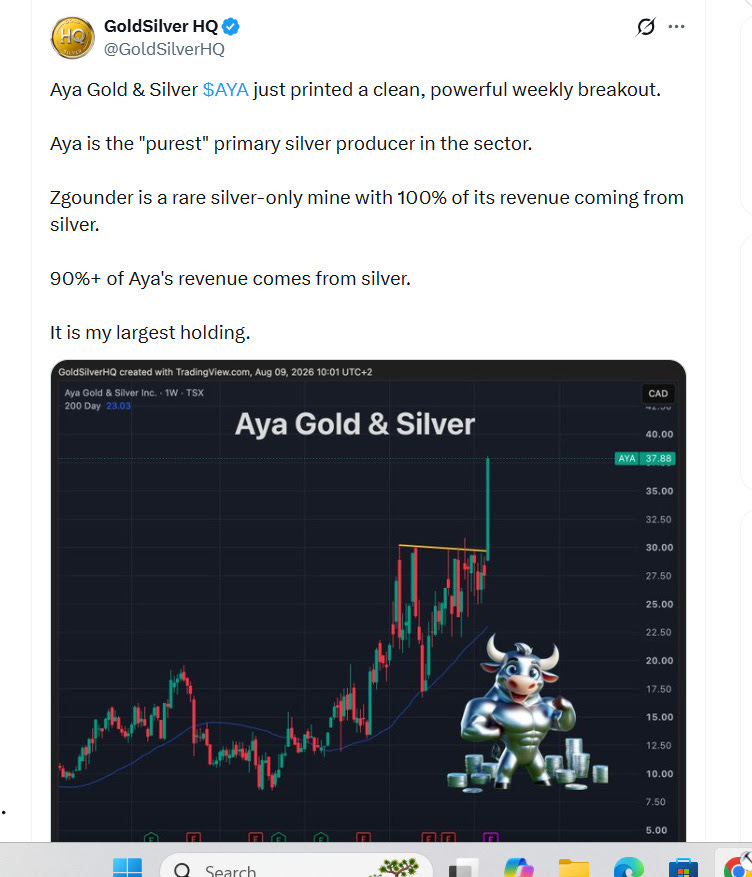
Aya offers strong silver torque because Zgounder is a predominantly silver operation whose expansion has moved production sharply higher while fixed mine, processing, and overhead costs do not rise proportionally. In 2025, Zgounder produced 4.83 million ounces; 2026 guidance is 5.2–5.8 million ounces. Higher silver prices can therefore lift revenue per ounce across a growing production base, magnifying operating cash flow. The counterweights are ramp-up execution, grades, recoveries, Moroccan operating risk, capital spending requirements. source below,
Andean Precious Metals
Andean provides silver torque chiefly through its San Bartolomé operation in Bolivia, which produced 4.45 million silver ounces in 2025 and is guided to 4.4–4.8 million in 2026. A rising silver price directly improves realized revenue on this output and can expand margins against local operating costs. Yet it is not a pure silver bet: Andean produces gold and owns gold assets, while feed agreements, throughput, metallurgical recovery, Bolivia-specific risk, and capital allocation influence results. source below,
Kuya Silver
Kuya can deliver silver-price torque because Bethania is a small, underground, silver-rich concentrate operation moving from restart into throughput ramp. Management has targeted stable 100 tonnes per day as a bridge toward 350 tonnes per day during 2026. That combination—rising payable silver volume and relatively fixed site costs—can make silver-price gains disproportionately valuable to cash flow and valuation. Peru is traditionally and still a superb jurisdiction.
https://www.ayagoldsilver.com/news/news-releases/
https://andeanpm.com/news/
https://www.kuyasilver.com/news/news-2026
our opinions are not our sponsors opinions
the editorial department is separate from the promotions department
not financial advice